
Can Perplexity Reliably Answer Technical Questions in the Life Sciences?
The generative text AI tool Perplexity has rapidly gained popularity in the life sciences for its ability to show its references when answering. As those references can include scholarly articles,...

AI-based Language Models: the End of Life Sciences Copywriters?
On November 30th, 2022, the world witnessed a technological revolution that would forever alter the landscape of content generation and communication. It was a day that will be remembered as...

How to Write a Life Science White Paper
From the perspective of the marketer, a critical early task in the life science buying journey is education. It may even come before your audience of scientists recognizes they have...
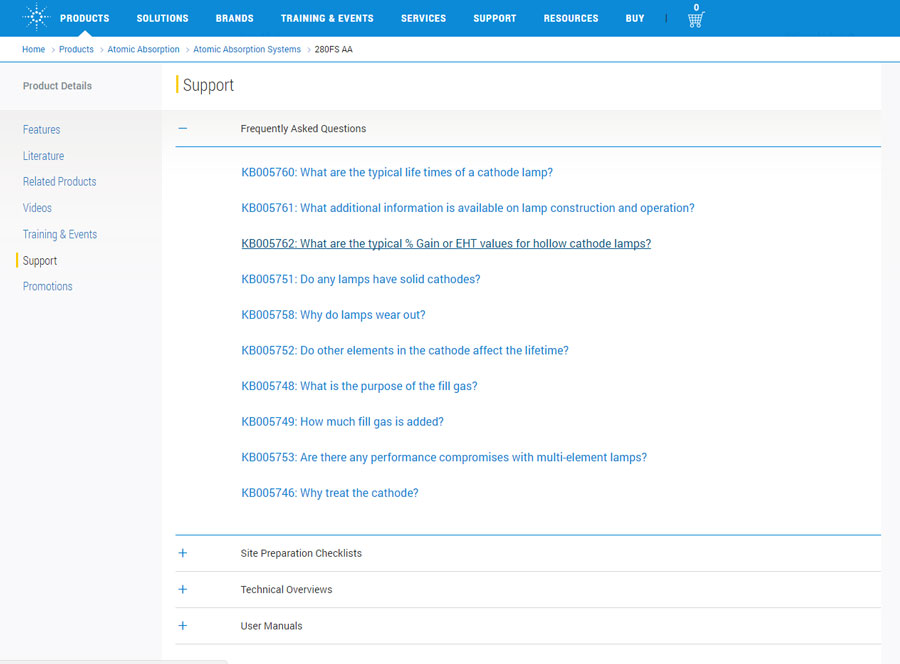
FAQs: Content and SEO’s Low-Hanging Fruit
Creating content in support of your products and services is hard. Finding something to say which is both unique and valuable to the audience is a non-trivial endeavor, however it...

We Just Got Skyscrapered
Just yesterday, we got skyscrapered. No, we didn’t get an office in a giant building or fly an ad from one or anything like that, nor is that some weird...

Personalization Can Backfire
Marketers are used to seeing a lot of data showing that improving personalization leads to improved demand generation. The more you tailor your message to the customer, the more relevant...

The Four Key Types of Content
There are a lot of reasons why content can fail to fulfill its objectives. When content fails, it usually just feels like “stuff” – things that are churned out more...

Increasing Customer Affinity
Affinity has a transformational value on brands. Google, Facebook, Apple and Amazon have all moved beyond having a simple transactional relationship with their customers to one that creates intimacy and...

If You Don’t Own Your Channels, You Don’t Own Your Audience
A very telling thing happened in October. YouTube, in preparation to release it’s paid subscription service, Red, told its top content creators that “any ‘partner’ creator who earns a cut...

Is Publishing the Holy Grail of Content Marketing?
There’s a lot of noise coming from some fairly reputable sources extolling the virtues of publishing as the next generation of content marketing (I’m sure you’ll be very familiar with...

Stop Thinking About Content
Content marketers in the life sciences have reached a critical point. The traditional paradigm of content marketing is becoming ineffective. Content marketers have endeavored to create, publish, share, and then...

Remove Steps With Content
While we strongly advocate that many content marketers in the life sciences shift from a content paradigm to a resource paradigm, there are still ample roles for more traditional content...
Should You Be A Thought Leader?
Being a “thought leader” has become cliché. That’s what most brands and most content marketers aspire to be, however. They want to be visionaries; oracles of their respective fields. It...

Content as a Sales Tool
A lot of people think about content marketing in terms of inbound marketing and lead generation. You create content and either make it freely available with perhaps CTA at the...

Content Segmentation
A common strategic issue involves trying to be all things to all people. In general, it doesn’t work. You need some degree of specialization in order to effectively create comparative...

Differentiation Through Content
All of us life science marketers know that we need to differentiate our products and services. Nothing new there. It’s critical to demonstrate a unique value and avoid commoditization. But...

The Power of Print
If the forecast calls for rain, followed by ever-increasing amounts of rain thereafter, what is the end result? Assuming the forecasts are correct, you would have one heck of a...

Organize Your Content
So you have a really good content marketing program up and running. You and / or your team are routinely publishing high-value content for your target scientists – blog posts,...
Content is for Your Customers
One of the biggest pitfalls of content creation – and by far the biggest content mistake by amateur life science marketers – is forgetting that your content isn’t just directed...

Content First, SEO Second
By now, any decent SEO-er knows that the old way of performing SEO – basically, manipulating ranks through inorganic backlinks – is worthless. Google caught on and killed it. As...

Maximizing the Value of Content
Creating quality content takes a good deal of effort. When marketers endeavor to create marketing content, it is generally created for a particular purpose. That’s usually out of necessity –...

Content Is Not Enough
Very few things are immune to the law of diminishing returns. Content marketing is certainly not one of them. As content marketing has surged in the life sciences over the...
Start Building an Audience
A lot of companies focus heavily on short-term demand-generation efforts. For small start-ups without venture funding, that is often out of necessity. However, many companies do so even when it...
Preferences for Content
We talk so much about content on a conceptual level that I thought it might be helpful to offer some more practical advice. Luckily for me, there’s a lot of...

Can the Shallow Content
We’re big advocates of content marketing, and we’re glad to see that content marketing is rapidly being adopted by life science companies. However, as content marketing becomes more popular, we’re...

Case: Content at a Small CRO
It feels like every week I see or learn something that reinforces just how valuable content is to life science companies. For instance, I was recently discussing some sales dilemmas...
Customer-Centric Content
Content marketing is no longer a novel tactic among life science tools and services companies. Truly effective content strategies, however, are still rare. Many life science marketers approach content marketing...
Product-Unrelated Value
At BioBM, we often advocate that companies find ways to create what we call “product-unrelated value” (we first discussed it publicly in a blog post last month). Note that when...

Adapt to Your Customers
It’s no secret that traditional approaches to life science marketing are becoming less effective. Customer behavior is changing, and returns on advertising dollars are being hit hard. A recent Harvard...

Customers of Content
Social media, blogs, social bookmarking, RSS, e-mail… There’s so much competing for scientists digital attention these days. When a scientist (or anyone) is in front of a computer they have...

Marketing: When & How
What I’m about to tell you isn’t anything groundbreaking. It’s not new, it’s not innovative, and you may even say that it’s obvious. It is, however, dramatically and consistently overlooked...

Technology & Scientific Sales
Technology provides scientific salesmen with great tools. Perhaps the best example of this in recent history, at least in terms of visibility and adoption, are salesmen’s use of tablet devices...
Comment on Webinars
I saw a post on one of the LinkedIn groups I’m a member of for a webinar that was of interest to me. Long story short: it was terrible. So...
Be The Expert
The life sciences are, almost by definition in being a science, a highly technical field. Most life science products, and certainly life science services, are of a similarly highly technical...